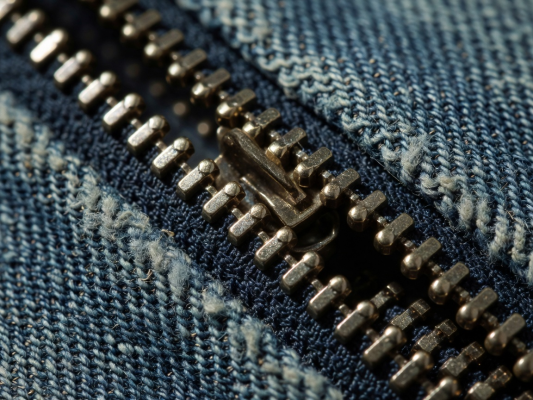
Few mechanical devices are as universally relied upon, and as violently frustrating when they fail, as the zipper. The zipper is an engineering marvel hidden in plain sight—a continuous sequence of precise, interlocking teeth that can seal a jacket against a blizzard or hold a deep-sea diving suit together under immense pressure.
The journey to the modern zipper began with Elias Howe, the inventor of the sewing machine. In 1851, Howe patented an "Automatic, Continuous Clothing Closure." However, he was so consumed with promoting his sewing machine that he entirely abandoned his closure mechanism. For decades, men and women continued to suffer through the tedious process of buttoning high-top boots and rigidly laced corsets.
Over forty years later, a Chicago inventor named Whitcomb Judson marketed a "Clasp Locker." Judson’s device, debuting at the 1893 Chicago World's Fair, was a complicated hook-and-eye shoe fastener. It was heavy, prone to jamming, and popped open unexpectedly. Despite founding the Universal Fastener Company, Judson’s invention was a commercial failure.
Gideon Sundback’s Breakthrough
The true turning point occurred when Swedish-American electrical engineer Gideon Sundback was hired by Judson’s company. Sundback realized that the flaw in Judson’s design was the reliance on hooks and eyes. In 1913, Sundback patented the "Hookless Fastener No. 2."
Sundback’s genius lay in his decision to increase the number of fastening elements from four per inch to ten or eleven. He designed two facing rows of teeth that pulled together in a continuous piece by a slider. Furthermore, Sundback invented the manufacturing machine for the new device. His "S-L" (scrapless) machine cut the scoops from a special Y-shaped wire and punched a dimple into each tooth, allowing the tooth above to nest perfectly into the one below.
Where Did the Name Come From?
For a decade, Sundback's invention was simply known as a "hookless fastener." It wasn't until 1923 that the B.F. Goodrich Company decided to use the device on a new type of rubber boots. Impressed by the speed and the sound of the device, a Goodrich executive reportedly slid the fastener up and down and exclaimed, "Zip 'er up!" The name "Zipper" was copyrighted for the boots, but the term was so catchy it soon became the generic word for the fastener itself.
Evolution of Materials
| Material Type | Introduced | Primary Uses | Characteristics |
|---|---|---|---|
| Brass / Nickel | 1910s | Jeans, Heavy Jackets, Boots | Highly durable, heavy, rigid tape integration |
| Molded Plastic | 1940s | Parkas, Bags, Tents | Rust-proof, symmetrical teeth, smooth action |
| Nylon Coil | 1960s | Sportswear, Luggage, Dresses | Flexible, self-healing, lightweight continuous coil |
| Waterproof / Watertight | 1980s | Drysuits, Space Suits, Outdoor Gear | Polyurethane coated tape, airtight seal capability |
The Anatomy of a Zip
A zipper consists of dozens of components. The fabric edges are known as the tape, usually made of polyester or cotton. The interlocking pieces are called teeth or elements. The piece you pull is the slider, which houses the pull tab. Inside the slider, a Y-shaped channel angles the teeth together or apart depending on the direction of travel. At the top and bottom are stops to prevent the slider from running off the track.
Today, the Japanese company YKK produces nearly half of the zippers on Earth. Producing over 7 billion zippers a year, YKK has maintained dominance through vertical integration—they not only make the zippers but also weave the tape, forge the metal, and construct the very machines that assemble the finished products.