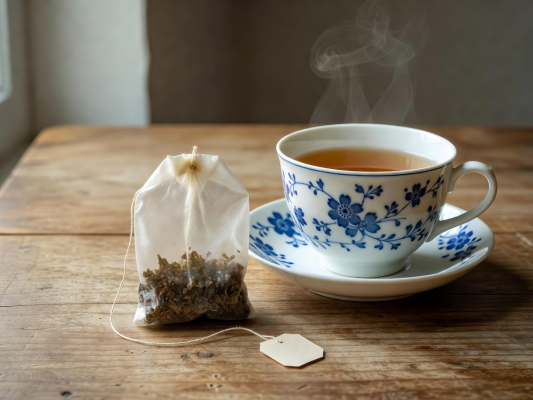
For thousands of years, the brewing of tea was an unhurried, ceremonial affair involving the careful measurement of loose leaves, intricate teapots, and the inevitable chore of straining the spent foliage. The modern tea bag, a hallmark of quick, disposable convenience, completely upended centuries of tradition—and it was entirely an accident.
Around 1908, a New York tea merchant named Thomas Sullivan was looking for a way to reduce the cost of distributing promotional samples of his tea blends. Traditionally, merchants sent samples in small, expensive metal tins. Sullivan hit upon the idea of sewing a small amount of tea leaves into hand-sewn, miniature silk pouches.
When Sullivan’s clients—mostly restaurants and wealthy individuals—received these novel little bags, they misunderstood the merchant's intentions. Instead of cutting the silk open to empty the loose tea into a pot, they assumed the pouch was meant to function like a miniature metal infuser. They dropped the entire silk bag directly into boiling water.
From Silk to Paper: Mass Production
The feedback was overwhelmingly positive. Customers loved the convenience and the fact that there were no messy leaves to clean out of their teapots. However, silk was not the ideal material. It was expensive and the tight weave sometimes prevented the boiling water from adequately interacting with the tea leaves, resulting in a weak brew.
Sullivan quickly pivoted to a lighter, more porous gauze, but the real technological leap occurred in 1929. German engineer Adolf Rambold, working for the company Teekanne, invented a double-chambered tea bag and a machine capable of packing them at high speeds. Rather than cloth, Rambold utilized a specialized filter paper made from a blend of wood and vegetable fibers (specifically abacá, a species of banana native to the Philippines). This paper was taste-neutral, highly porous, and strong enough not to disintegrate in boiling water.
The Evolution of Shape and Material
| Era | Material | Shape | Brew Quality Issue |
|---|---|---|---|
| 1908 | Hand-sewn Silk | Pouch | Poor water circulation; expensive |
| 1929 | Abacá Fiber Paper | Double-chamber Rectangular | Standardized the quick infusion |
| 1990s | Bleached Paper | Round / Rectangular | Environmental concerns over bleaching agents |
| 2000s | Food-grade Nylon / PET | Pyramid | Microplastics release during boiling |
The Modern Controversy
The tea bag democratized tea drinking, making it a ubiquitous beverage in the workplace and the home. However, it also drove down the overall quality of tea. Because the bags are opaque, producers began filling them with "fannings" and "dust"—the small, broken remnants of tea leaves left over after higher grades were sorted for loose-leaf sale. This broken tea infuses extremely quickly, resulting in a strong, dark color, but often lacking the complex flavor profile of whole-leaf tea.
In recent years, the industry has seen a push toward pyramid-shaped bags made from biodegradable materials like cornstarch (PLA). The pyramid shape provides more internal volume, allowing whole loose leaves to expand as they rehydrate, bridging the gap between Thomas Sullivan’s accidental convenience and the ancient desire for a high-quality cup of tea.